Guides
Roofing Contractor North Miami: Questions, Permits, Quotes
Hiring a roofing contractor in North Miami? Learn which questions to ask, how Miami-Dade permits work, and how to read an estimate. Book your inspection.
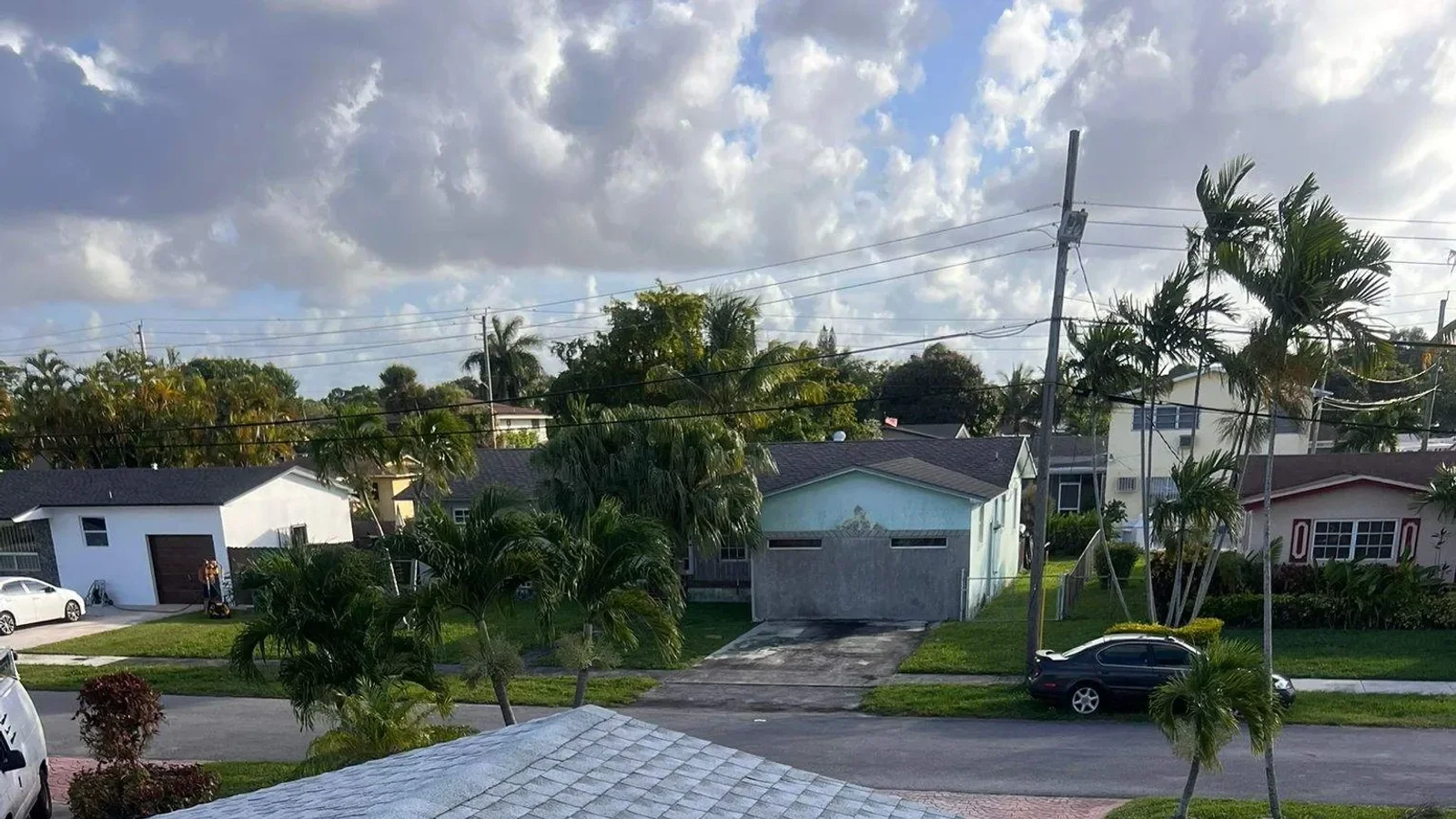
A new roof is one of the biggest checks a North Miami homeowner will ever write. Picking the wrong crew can cost you twice. This guide walks you through how to vet a roofing contractor in North Miami, what Miami-Dade's wind codes mean for your project, and how to read an estimate line by line. By the end, you'll know exactly what to ask before anyone climbs a ladder.
Why hiring a roofer here isn't like hiring one anywhere else
Most hiring advice online is written for the whole country. That's a problem in South Florida. Miami-Dade County sits inside the High-Velocity Hurricane Zone (HVHZ) under the Florida Building Code, which sets some of the strictest roofing requirements in the United States. A crew that does great work in another state may not know these rules cold.
So the first filter is simple. Does this company work in Miami-Dade every week?
The HVHZ changes how roofs get built
Inside the HVHZ, roofing products generally need a Miami-Dade Notice of Acceptance (NOA) or an equivalent approval showing they've been tested for local wind conditions. Fastening patterns, underlayment methods, and edge details are more demanding than in much of the state. A contractor who works here regularly should be able to explain which approved products they plan to use and why.
Sun, salt, and summer storms
North Miami roofs face intense UV exposure, salty air near Biscayne Bay, and heavy afternoon downpours for months at a time. Those conditions punish flashing, sealants, and fasteners. A local roofer plans for that from the start instead of treating it as an afterthought.
Local knowledge speeds everything up
Knowing which building department reviews your permit, how inspections get scheduled, and what inspectors commonly flag can save real time. North Miami is its own municipality, and some nearby addresses fall under unincorporated Miami-Dade instead. Your contractor should know which one applies to your home without guessing.
Credentials first: what to verify before you sign
Here's a counterintuitive point. The friendliest salesperson isn't the best signal of a good roofer. The paperwork is. Spend ten minutes verifying credentials and you'll filter out most of the risk in this process.
Check the Florida license yourself
Florida licenses roofing contractors through the Department of Business and Professional Regulation (DBPR). Ask for the license number and look it up on the DBPR website. Confirm the name matches the company on your contract and that the license is active. It takes about two minutes.
Ask for proof of insurance, sent from the agent
You want to see general liability coverage and workers' compensation (or a valid exemption, which you should ask about directly). The cleanest way to confirm coverage is to request a certificate of insurance sent straight from the insurance agent. If a worker gets hurt on your roof and the contractor isn't properly covered, that's a situation you want to avoid entirely.
Look for a real local footprint
A physical presence, a working local phone number, and a history of reviews from Miami-area homeowners all matter. Read reviews for patterns rather than single comments. Do people mention clear communication? Clean job sites? Problems fixed quickly? Those details tell you more than star counts alone.
Ten questions to ask any roofing contractor
Bring this list to every estimate appointment. A strong contractor will answer each question plainly. Hesitation on several of them is a warning sign.
- What's your Florida license number? Then verify it on the DBPR site.
- Who will be on my roof? Ask whether the crew is in-house or subcontracted, and who supervises the job day to day.
- Will you pull the permit? The licensed contractor should handle permitting. Be cautious if anyone asks you to pull it as an owner-builder.
- Which products will you install, and do they carry Miami-Dade approval? Ask for NOA details for the roofing system.
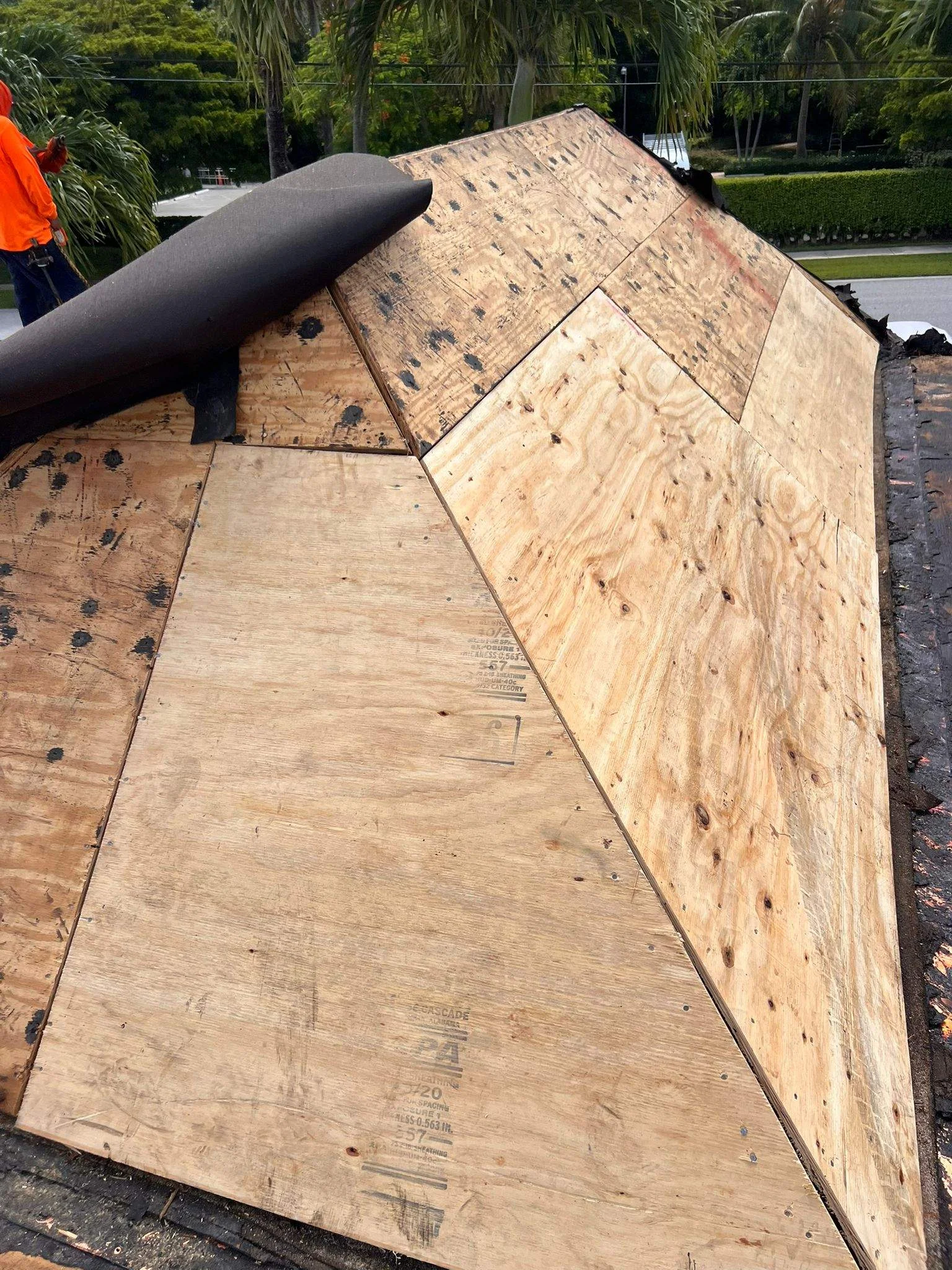
- How will you handle the decking? Find out how they inspect decking once the old roof is off and how replacement boards are priced.
- What's included in cleanup? Nails in driveways and lawns are a real hazard. Ask about magnetic sweeps and debris removal.
- What warranties apply? Separate the manufacturer's product warranty from the contractor's workmanship warranty, and get both in writing.
- How long will the job take? Ask about weather delays and how they protect an open roof if a storm rolls in.
- How do payments work? Understand the schedule and what milestones trigger each payment.
- Will you provide lien releases? More on this below. It matters.
Listen for specifics, not slogans
"We do quality work" tells you nothing. "We'll replace damaged decking, install a peel-and-stick underlayment, and use approved fasteners at the spacing your system requires" tells you a lot. Specific answers usually come from people who actually do the work.
Red flags worth walking away from
Be wary of door-to-door pitches right after a storm, pressure to sign the same day, requests for large cash deposits, or offers to "cover" an insurance deductible. Also be wary of any reluctance to put things in writing. A legitimate roofing company in North Miami, FL will give you time to decide.
Roof replacement permits in Miami-Dade, explained plainly
Permits feel like red tape until you need one. Then they're the record showing your roof was installed and inspected to code. That record can matter for insurance and when you sell the home.
A quick note before we go further: permit requirements vary by jurisdiction and change over time. Treat this section as an overview, and confirm details with your local building department or a licensed contractor.
Who pulls the permit and why it matters
For a typical re-roof, your licensed roofing contractor applies for the permit with the correct building department. That's the City of North Miami for addresses inside city limits, or Miami-Dade County for unincorporated areas. The permit ties the job to that contractor's license, which gives you a layer of accountability.
The Notice of Commencement
Under Florida's Construction Lien Law, larger improvement projects often require a Notice of Commencement recorded with the county before work begins. It's a public document identifying the property, owner, and contractor. Your contractor should explain whether your project needs one and help you through it.
What inspections typically look like
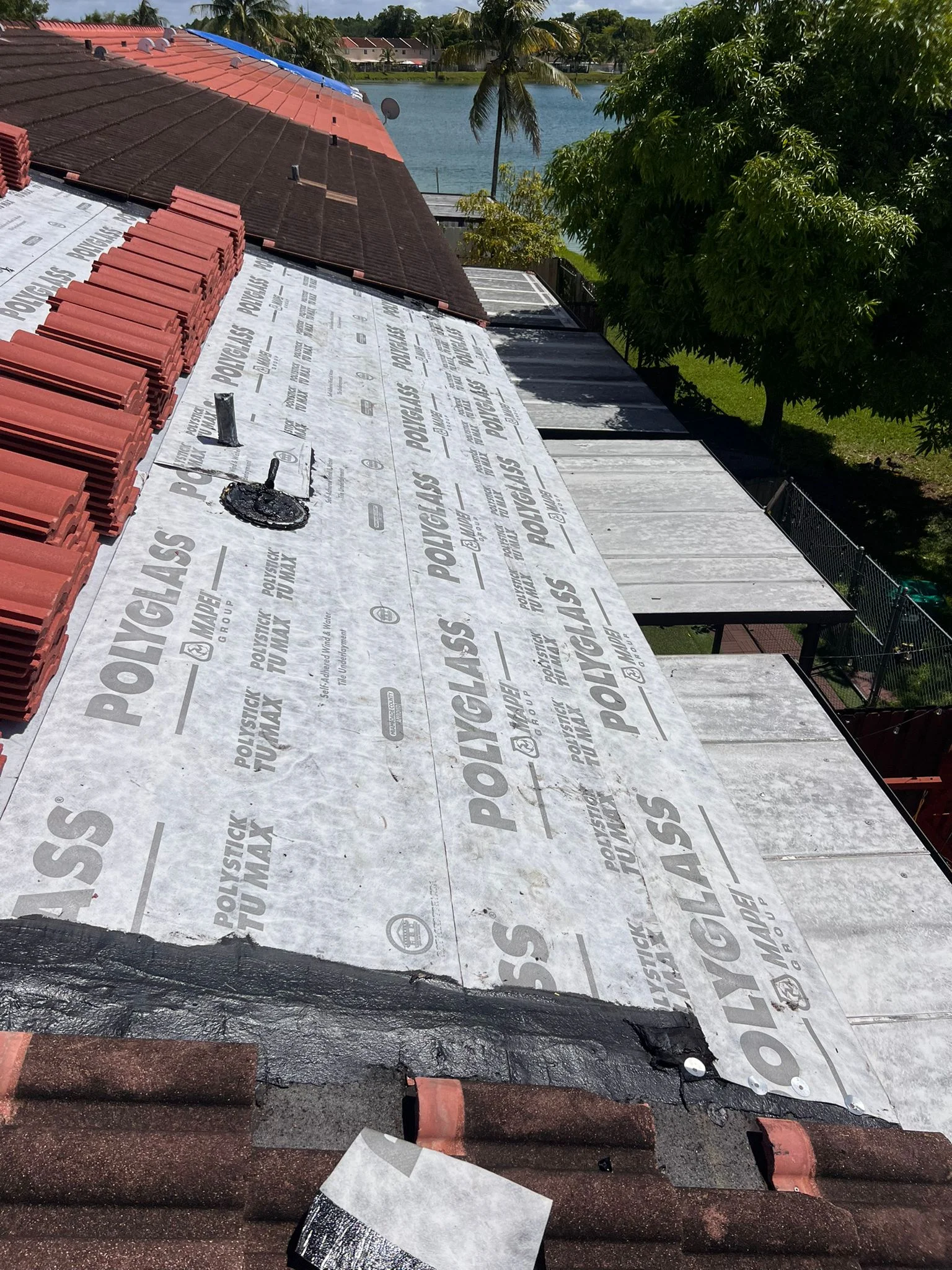
Re-roof permits in the HVHZ usually involve inspections at key stages, such as after the underlayment goes down and again at final. Inspectors check things like fastening and installation against the approved products. Plan for these steps in your timeline. They protect you.
How to read a roofing estimate without getting lost
Two estimates can look wildly different and still describe nearly the same job. Or they can look similar and describe completely different roofs. The only way to know is to compare them line by line.
What a thorough estimate should include
Use this table as a checklist when you lay estimates side by side. Each row is an item a complete written estimate should address.
| Estimate item | What it should spell out | Question to ask if it's missing |
|---|---|---|
| Tear-off and disposal | Removal of existing layers and haul-away of debris | How many layers are coming off, and who handles the dumpster? |
| Decking | How damaged decking is identified and replaced, and how it's priced | What happens if you find rotten wood after tear-off? |
| Underlayment | Type of underlayment and installation method | Is this product approved for use in Miami-Dade? |
| Roofing material | Product type, manufacturer, style, and color | Can I see the NOA or product approval? |
| Flashing and edge metal | New drip edge, valley, wall, and penetration flashing | Are you replacing flashing or reusing it? |
| Ventilation | Vents to be replaced, added, or sealed | Does my attic need ventilation changes? |
| Permits and inspections | Who pulls the permit and schedules inspections | Are permit fees included in this number? |
| Warranties | Manufacturer and workmanship coverage, in writing | What does your workmanship warranty actually cover? |
| Cleanup | Daily cleanup and final magnetic nail sweep | How do you protect landscaping and pool areas? |
What actually drives the cost
Roof size and pitch come first. Steeper roofs take more labor and safety equipment. Material choice is next, since tile, metal, shingle, and flat-roof systems vary a lot in both materials and installation time. Hidden decking damage, the number of old layers being removed, roof complexity (valleys, skylights, chimneys), and access to the property all play a role too. When one bid comes in far below the others, find out which of these items it skips.
Why the lowest bid isn't always the cheapest roof
A low number can hide a reused flashing plan, a thinner underlayment, or a vague decking clause that turns into change orders later. Compare scope, not just totals. If a bid leaves out an item from the table above, ask for it in writing before you decide.
Repair, replace, or just inspect? Start with an honest assessment
Not every roof problem means a new roof. Sometimes a few cracked tiles or a failed boot around a vent pipe is the whole story. A good contractor tells you which situation you're in, even when the answer is the smaller job.
When a repair makes sense
Isolated leaks, storm damage confined to one section, or loose flashing on an otherwise healthy roof often call for targeted repair work. Fixing these early can help limit water damage to decking and ceilings. Stains on the ceiling are worth a call, not a wait-and-see.
When replacement is the smarter move
Widespread granule loss, many cracked or slipped tiles, soft spots in the decking, or repeated leaks in different areas usually point toward replacement. Age matters as well, especially when the roof is near the end of its expected service life. If your insurer is asking questions about roof condition, a professional assessment gives you something concrete to work from. When the signs add up, it's worth talking through full roof replacement options with a licensed roofer.
Why an inspection comes first
An inspection gives you facts before you spend anything on repairs. A roofer can check flashing, penetrations, decking, gutters, and drainage, then document what they find with photos. That way you're deciding based on evidence, not a sales pitch.
What working with PSR Roofing Company of Miami looks like
We built our process around the questions in this guide. PSR Roofing Company of Miami handles roof installation, replacement, repair, inspections, emergency roofing, and gutter installation for homeowners in North Miami and across the Miami area.
We start with a walk-through and a clear write-up
Our team inspects the roof, explains what we see in plain language, and puts the scope in writing. You'll know what materials we recommend, how we handle decking, and what the timeline looks like. No guesswork.
We handle the paperwork
Permits, product approvals, and inspection scheduling are part of our job, not yours. We'll walk you through any documents that need your signature and explain what each one does. If you have questions about lien releases, ask. We're glad to explain them.
We stay reachable when weather turns
Storm season in North Miami doesn't wait for business hours. If a storm damages your roof, our emergency roofing service can help with temporary protection like tarping and then a proper repair plan. We'll tell you honestly what can wait and what can't.
Frequently asked questions
Do I need a permit to replace my roof in North Miami?
In most cases, yes. Roof replacements generally require a permit through the City of North Miami or Miami-Dade County, depending on your address. Requirements vary, so confirm with your contractor or the building department.
How do I verify a roofing contractor's license in Florida?
Ask for the license number and search it on the Florida DBPR website. Make sure the license is active and the name matches your contract.
What is a Miami-Dade NOA?
A Notice of Acceptance is a product approval showing a roofing product has been tested and accepted for use in Miami-Dade's High-Velocity Hurricane Zone. Ask your contractor which approved products they plan to use.
How many estimates should I get?
Many homeowners compare two or three written estimates. Compare the scope line by line, not just the bottom number.
What is a lien release, and why should I ask for one?
A lien release confirms that suppliers and subcontractors have been paid for their part of your job. Getting final releases can help protect you from liens tied to unpaid bills.
How long does a roof replacement take?
It depends on roof size, material, permitting, inspections, and weather. Your contractor should give you a realistic timeline in writing and explain what could shift it.